Before the Pivot Becomes a Post-Mortem: Identifying the Structural Failures That Doom Strategic Redirections in Their Second Year
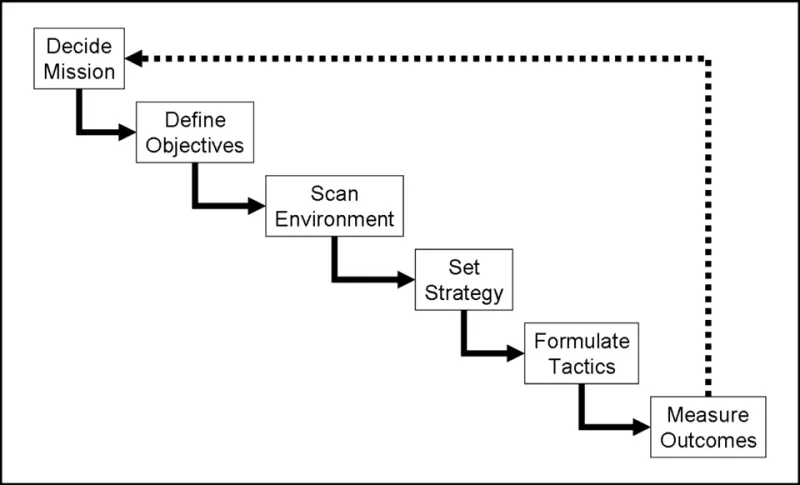
Photo: Compo, CC BY-SA 3.0, via Wikimedia Commons
There is a particular kind of organizational optimism that surrounds a corporate pivot. Boardrooms fill with energy. Strategy decks grow thicker. Leadership teams align around a new direction with the conviction that this time, the repositioning will take hold. And for a brief period — often the first twelve months — it does.
Then year two arrives.
Research consistently places the failure rate of major corporate pivots somewhere north of 70 percent, with the collapse almost never occurring at launch. The warning signs were present earlier, embedded in the planning assumptions, the resource allocation models, and the organizational structures that executives built to support the new direction. They simply went unexamined.
For US companies operating in increasingly compressed competitive cycles, the cost of a failed pivot is no longer just financial. It is reputational, cultural, and strategic — consuming leadership bandwidth that cannot be recovered.
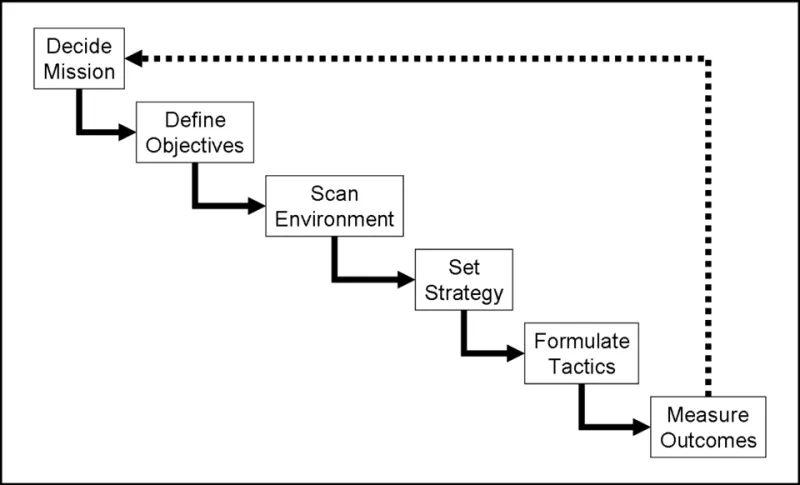
This article examines the patterns that doom otherwise well-reasoned strategic redirections and offers a diagnostic framework for stress-testing pivots before they become irreversible commitments.
Why Year Two Is the Breaking Point
Most pivots are resourced for a launch, not a transition. The distinction matters enormously.
In the first year, momentum substitutes for infrastructure. Executive attention is high, external announcements create accountability, and teams operate with the adrenaline of novelty. Performance metrics are still being calibrated, which means underperformance often goes undetected or is rationalized as a natural ramp-up period.
By year two, that scaffolding collapses. The executive sponsor has redirected attention to the next priority. The dedicated pivot team has been absorbed back into the broader organization. Budget cycles have normalized, and the new strategic direction now competes for resources against established business units with proven track records.
This is when the structural deficiencies surface — and by then, the organization has already committed significant capital, talent, and credibility.
The Four Structural Failure Patterns
1. The Capability Gap That Was Underwritten, Not Closed
Perhaps the most common failure pattern involves organizations that pivot toward a market or product category that demands capabilities they do not genuinely possess. Rather than building or acquiring those capabilities before launch, they proceed on the assumption that execution will develop them organically.
Consider the frequency with which established consumer goods companies have attempted to enter direct-to-consumer digital channels over the past decade. Many possessed exceptional brand equity and supply chain sophistication — but lacked the data science infrastructure, customer acquisition expertise, and platform agility that the pivot required. The capability gap was acknowledged in planning documents and then quietly underwritten with optimistic timelines.
The diagnostic question executives should ask before committing: Are we building toward a capability, or betting on acquiring it through exposure? The former is a strategy. The latter is a wish.
2. Market Assumptions That Were Validated Internally
Strategic pivots frequently rest on market sizing and demand assumptions that were developed inside the organization — often by the same teams advocating for the pivot. This is not necessarily a product of dishonesty. It is a structural problem with how strategy is assembled.
When the team proposing a repositioning is also responsible for validating its commercial viability, confirmation bias is an almost inevitable output. Competitive intensity gets underestimated. Customer switching costs get misread. Adoption timelines get compressed.
Robust pivot planning requires deliberate adversarial analysis — a structured process in which a separate team is explicitly tasked with disproving the core assumptions. This is not pessimism; it is discipline.
3. Organizational Misalignment Below the Executive Layer
Executive alignment on a pivot is necessary but insufficient. The more consequential alignment — and the more commonly absent one — occurs at the middle management and operational levels where the strategy actually gets executed.
Mid-level managers are often the last to genuinely internalize a strategic redirection. Their incentive structures, reporting relationships, and day-to-day priorities were built around the prior strategy. Without deliberate redesign of those systems, they will — rationally and without malice — continue optimizing for the old direction.
Organizations that successfully execute pivots invest heavily in translating strategic intent into operational specifics at every layer of the company. Those that fail tend to communicate the destination without redesigning the road.
4. The Funding Horizon Mismatch
Many pivots are funded on a twelve-to-eighteen month horizon, while the market dynamics they are attempting to capture operate on a three-to-five year cycle. When early returns fail to meet compressed expectations, leadership pulls back investment — often precisely at the moment when the pivot required additional commitment to reach viability.
This pattern is particularly acute in publicly traded companies, where quarterly earnings pressure creates a structural tension with multi-year strategic transitions. The pivot is announced with long-term language and funded with short-term patience.
A Pre-Launch Diagnostic Framework
Before committing resources to a strategic redirection, executive teams should subject the pivot to a structured stress-test across five dimensions:
Capability Audit: Map the specific capabilities required for the pivot to succeed. For each gap identified, document whether the plan calls for building, buying, or partnering — and assign a realistic timeline and cost to each.
Assumption Provenance: For every core market assumption embedded in the business case, identify who produced it and what incentive they had to see the pivot succeed. Commission independent validation of the three assumptions with the greatest financial impact.
Organizational Readiness Assessment: Survey middle management on their understanding of the new strategic direction, their existing incentive alignment, and the specific operational changes they anticipate. Gaps between leadership's expectations and frontline reality are early indicators of execution failure.
Funding Scenario Modeling: Model the pivot's performance under three scenarios — accelerated, base, and extended adoption timelines — and explicitly define the investment commitment required under each. Determine in advance the threshold at which the organization would increase investment versus exit.
Second-Year Sustainability Review: Articulate specifically how the pivot will be resourced, governed, and measured in year two — after launch energy has dissipated and the initiative must compete for attention and capital alongside established priorities.
The Strategic Discipline of Pre-Commitment Scrutiny
There is a cultural resistance in many US corporate environments to applying rigorous skepticism to a pivot that leadership has already endorsed. The concern is that scrutiny signals doubt, and doubt undermines momentum.
This reasoning inverts the actual risk. The organizations that subject their pivots to the most demanding pre-commitment analysis are not the ones that fail to launch — they are the ones that launch with the structural foundations in place to survive year two.
A pivot that cannot withstand adversarial stress-testing before launch will not survive the market's stress-testing after it. The graveyard of failed corporate redirections is filled not with bad ideas, but with structurally unsound executions that were never examined closely enough before the first dollar was spent.
The frameworks exist. The discipline to apply them is the variable that separates the companies that pivot successfully from those that spend two years learning an expensive lesson.